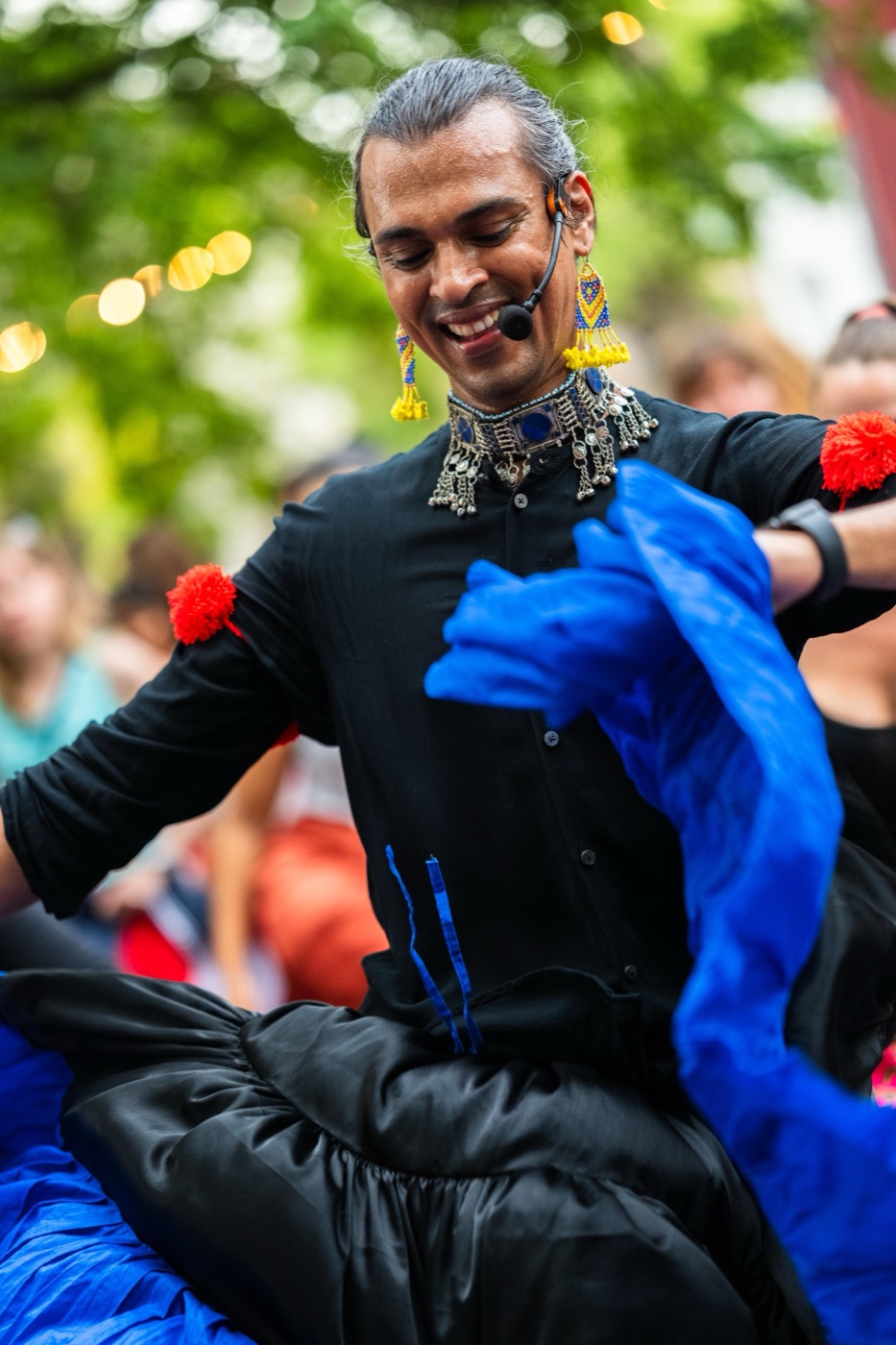
Swapnil Dagliya leading a large outdoor Indian dance class at a Ghent summer festival

Shoonya Dance Centre · Gent · 26–29 August 2026

Four days. Five forms.

Indian Dance Summer Intensive 2026A technique-first dive into the roots of Indian folk and semi-classical dance.

About the intensive

The building blocks
of Indian dance.

Four evenings and one full Saturday working through the mechanics of India's most iconic folk and semi-classical dance traditions — not as routines to memorise, but as movement systems to understand. Each session focuses on a single form: the bounce of Bhangra, the precision of teentaal, the earth-contact of Tippani, the percussion of Terah Taali, the desert spins of Kalbeliya. Open to all levels. No prior Indian dance experience required.

5Dance forms
13hTotal studio time
4Days in Gent
OpenLevel — all welcome

The programme

Five sessions.
26–29 August 2026.

DayFormTimePrice
Wed · 26 Aug
Bhangra & Luddi
The Punjabi Toolkit
18:30–21:30
€40
Thu · 27 Aug
Semi-Classical
Rhythm, Grace & Teentaal
18:30–21:30
€40
Fri · 28 Aug
BollyFolk
Tippani & Bihu
18:30–21:30
€40
Sat · 29 Aug
Terah Taali Limited
Rhythmic Percussion · morning
10:00–12:00
€35
Sat · 29 Aug
Kalbeliya
Desert Technique · afternoon
12:30–14:30
€30

The five forms

Five forms, one weekend.

Bhangra & Luddi
01
Bhangra & Luddi
Wed · 26 Aug
Semi-Classical
02
Semi-Classical
Thu · 27 Aug
BollyFolk
03
BollyFolk
Fri · 28 Aug
Terah Taali
04
Terah Taali
Sat · 29 Aug
Kalbeliya
05
Kalbeliya
Sat · 29 Aug
Bhangra dancers performing in a group — energetic Punjabi folk dance© Stijn Dejonckheere
Wednesday · 26 August · 18:30–21:30

Bhangra
& Luddi

The Punjabi Toolkit

The characteristic bounce of Bhangra comes from precise weight transfer between the legs — a rhythmic give-and-take that generates energy rather than spends it. We isolate that mechanic, then layer arm patterns and rhythmic drills before stepping into the celebratory Luddi style — clapping, finger clicks and circular steps. No prior Punjabi dance experience needed.

Semi-classical Indian dance — mudra hand gestures and graceful posture© Kattoo Hillewaere
Thursday · 27 August · 18:30–21:30

Semi-Classical

Rhythm, Grace & Teentaal

A bridge between folk expression and classical discipline. We build posture, mudras (hand gestures) and hand-eye coordination, then anchor everything inside teentaal — the 16-beat rhythmic cycle at the heart of Hindustani classical music. A short choreography gives the techniques a home.

BollyFolk dance — Tippani stick work and energetic folk movement© Stijn Dejonckheere
Friday · 28 August · 18:30–21:30

BollyFolk

Tippani & Bihu

Two contrasting folk vocabularies merged into one choreography. Tippani, from Gujarat, is built on rhythmic pole-striking — a dance rooted in earth contact. Bihu, from Assam, is its opposite: fast, swinging hip movements celebrating the harvest season. Wooden sticks provided.

Swapnil Dagliya performing Terah Taali — brass cymbals tied to wrists, elbows and knees© Stijn Dejonckheere
Saturday · 29 August · 10:00–12:00

Terah Taali

Rhythmic Percussion

Thirteen small brass cymbals — manjiras — tied to the wrists, elbows, arms and knees. Each strikes in a distinct pattern, together creating a full percussion performance from within the body. Originally performed in devotion to Rajasthani folk deity Baba Ramdevji by the Kamada women of the Thar Desert. Seated form; percussion props included.

Kalbeliya dance — flowing black skirt with mirrors, desert technique from Rajasthan© Stijn Dejonckheere
Saturday · 29 August · 12:30–14:30

Kalbeliya

Desert Technique

The cobra dance of Rajasthan. Born from the nomadic Kalbeliya tribe of the Thar Desert — snake handlers who preserved their culture through dance when their livelihood was outlawed in 1972. The technique centres on spine articulations, hip isolations and fast floor-level spins in flowing black skirts embellished with mirror-work. Popularised internationally by Gulabo Sapera.

Tickets & pricing

Come for one.
Stay for all five.

Single evening sessionWed · Thu · Fri · 3 hours each
€40Members €36
Terah TaaliSat morning · 2 hours · limited spots
€35Members €31.50
KalbeliyaSat afternoon · 2 hours
€30Members €27
Saturday day passTerah Taali + Kalbeliya
€60Members €55
Full 4-day summer passAll 5 sessions · 13 hours totalSaves €35
€150Members €140

“Members” = registered Shoonya students; the member price applies automatically at checkout.
All tickets are non-refundable. Questions? Contact us

Book your spot

Ready to register?

Register via the Shoonya registration form. You can book individual sessions or the full pass in one transaction.

Register now →

Shoonya Dance Centre · Stapelplein 41 · 9000 Gent

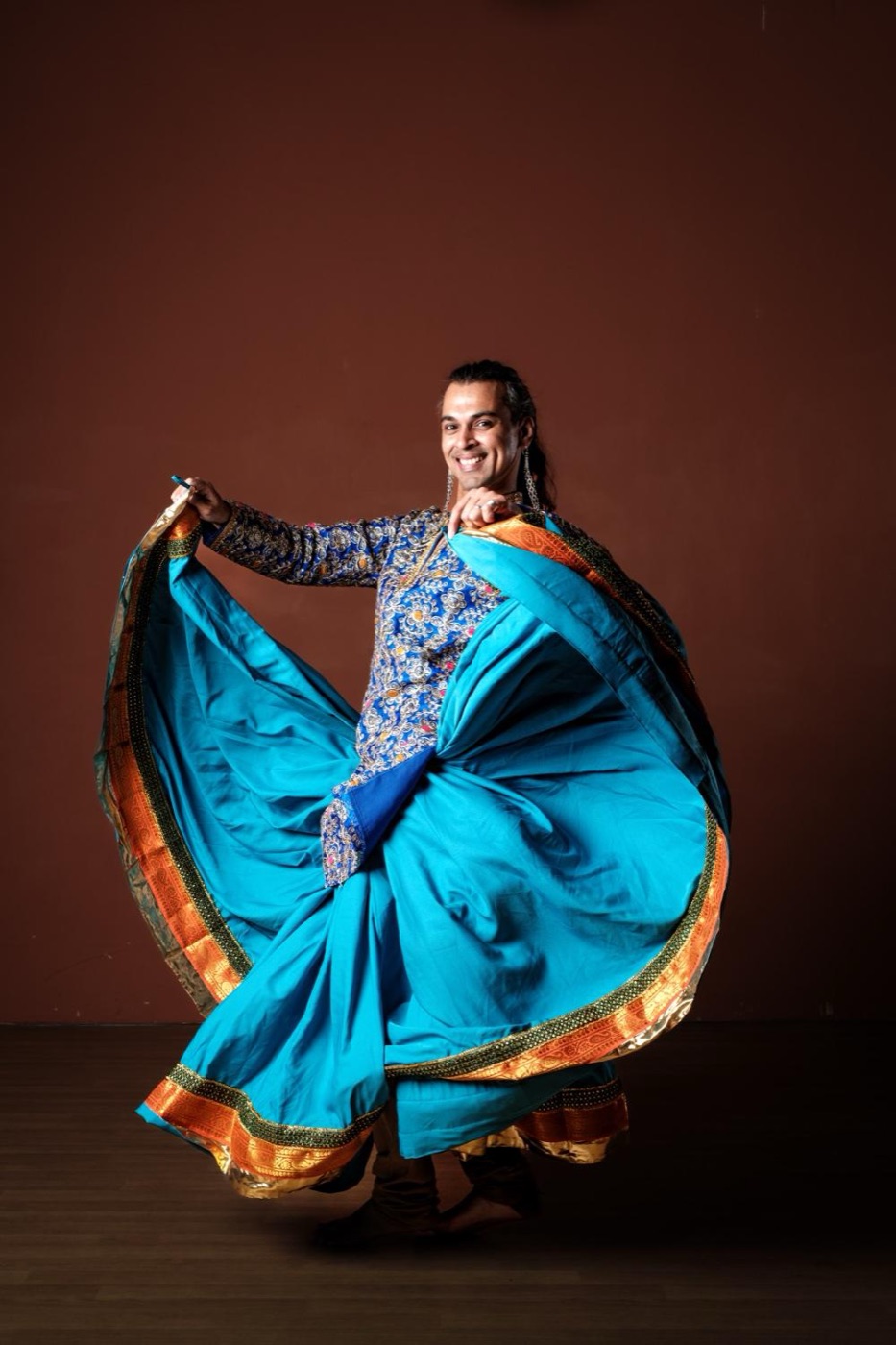
Swapnil Dagliya twirling a ghoomar skirt — Artistic Director of Shoonya Dance Centre© Kattoo Hillewaere

Your teacher

Swapnil Dagliya

Artistic Director · Shoonya Dance Centre

Born and raised in Pune, India, Swapnil holds a diploma in Indian folk dance and is a certified Learn Bhangra® instructor. He trained at Broadway Dance Center in New York and completed advanced studies at Opus Ballet in Florence.

He is the artistic director and co-founder of Shoonya Dance Centre in Gent, and leads ABC — a Bollywood Company. Each year he curates the Gent India Dans Festival.

His intensives work from source material — theory, technique, and cultural context — not surface choreography. Students come from across Belgium and Europe.

BhangraKalbeliyaTerah TaaliBollyFolkSemi-ClassicalBollywoodGarbaKathakYoga

FAQ

Common questions

Everything you need to know before you register.

Do I need prior Indian dance experience?
No. All five sessions are open level — beginners and experienced dancers are equally welcome. Each session is self-contained and Swapnil teaches from first principles, so no prior vocabulary or technique is assumed. If you can move, you can attend.
Can I attend just one or two sessions?
Yes. Individual tickets are available for every session: €40 per evening session (Wed/Thu/Fri), €35 for Terah Taali, and €30 for Kalbeliya. The Saturday day pass (€60) combines both Saturday sessions. The Full 4-Day Summer Pass (€150) covers all five and saves €35.
What is Kalbeliya dance?
Kalbeliya is a traditional folk dance from Rajasthan, India, created by the nomadic Kalbeliya tribe — historically snake handlers in the Thar Desert. The dance is characterised by fluid spine articulations, hip isolations and fast floor-level spins in flowing black skirts embellished with mirror-work. It was brought to international prominence by dancer Gulabo Sapera and is recognised as Intangible Cultural Heritage by UNESCO.
What is Terah Taali?
Terah Taali means "thirteen beats." It is a seated folk dance from Rajasthan performed by women of the Kamada tribe. The dancer plays 13 small brass cymbals (manjiras) tied to the wrists, elbows, arms and knees, creating a complete percussion performance while dancing. It has deep devotional roots connected to the folk deity Baba Ramdevji.
What does "open level" mean in practice?
Open level means no pre-qualification, no audition, and no assumed vocabulary. Swapnil builds technique from the floor up — so complete beginners gain a real foundation, and experienced dancers gain precision in forms they may not have studied before. The sessions are appropriate for both.
Where is Shoonya Dance Centre?
Shoonya Dance Centre — Studio Aakash — is at Stapelplein 41, 9000 Gent, Belgium. A 10-minute walk from Gent-Dampoort station. Paid street parking is available nearby. Questions? Contact us

26–29 August 2026 · Gent

Four days.
Five forms.
Your summer in Gent.

Choose one session or the full pass. Open level — beginners and experienced dancers welcome. Shoonya Dance Centre, Stapelplein 41.

Register now

Bhangra · Semi-Classical · BollyFolk · Terah Taali · Kalbeliya

More at Shoonya

← All workshops